
Zahar Efimenko Is Rewriting the Story of German Women’s Chess
28.10.2025 10:40 | NewsWhen the German Chess Federation announced that Zahar Efimenko would become the new coach of the women’s national team, there was hardly a voice of dissent.
On the contrary — players and officials alike agreed that there could hardly be a better choice. “He’s young, energetic, and brings calm and confidence to the team,” said federation president Ingrid Lauterbach. And Lara Schulze, one of the team’s key players, added: “He knows how to criticize in a way that motivates you instead of breaking you.”
Efimenko, a former Ukrainian grandmaster who once reached a peak rating of 2708, previously worked as a second to Vladimir Kramnik between 2011 and 2014. “That was an invaluable experience,” he recalls. “We spent days and nights at the computer, searching for new ideas, testing everything. In London, Kramnik came closest to returning to the world championship match — but Carlsen had a bit more luck that time.”
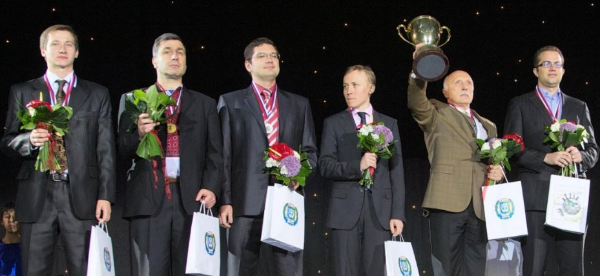
His own playing career includes achievements that would easily define another person’s lifetime — Olympic gold with Ukraine in 2010, a Bundesliga title with Werder Bremen, and countless victories over world-class opponents. But today, what excites him most is what he can build with others. “The most important thing in any team is a friendly atmosphere and mutual respect,” he often says. “Without that, nothing works — not in chess, not in life.”
After Russia’s invasion of Ukraine, Efimenko found himself facing a difficult decision. “I wanted to go and fight,” he later told the German Chess Federation. “But there were more volunteers than weapons.” Eventually, through his connections at Werder Bremen, he managed to relocate with his family to Delmenhorst, Germany. There he began teaching chess, learned German up to a C1 level, and slowly built a new life. “Delmenhorst has become our second home,” he says. “Returning to Ukraine isn’t an option right now, but here we feel safe.”
His coaching style differs from the typical image of a commanding trainer. Efimenko listens more than he lectures. “Every player is different,” he explains. “My job is to understand what each of them needs — motivation, peace of mind, or a challenge.” The players appreciate exactly that human approach. “He’s kind but firm,” Schulze said. “And above all, he helps us believe in ourselves.”
And that might be exactly what the German women’s team has been missing for years. None of the players lack talent — the real problem is consistency. Efimenko knows it well. “They all have the potential. The performances just swing too much. Our goal is to find stability — both on the board and in the mind.”
He’s taking over at a transitional time, as Elisabeth Pähtz, the team’s long-time leader, stepped away after more than twenty years on the national squad. “It’s a challenge,” Efimenko admits. “But also a chance to build something new.”
When asked what advice he would give to players who want to improve, his answer was simple: “Choose an opening that suits you, and play it until you truly understand it. In the middlegame, think in plans, not in moves. And in the endgame, just know the basics. Chess isn’t magic — it’s a mirror. It shows who you are.”
And perhaps that’s why his players follow him so naturally. He doesn’t need to impress anyone. He simply does the work — with humility, experience, and the quiet conviction that sometimes the most important moves are not made on the board, but between people.
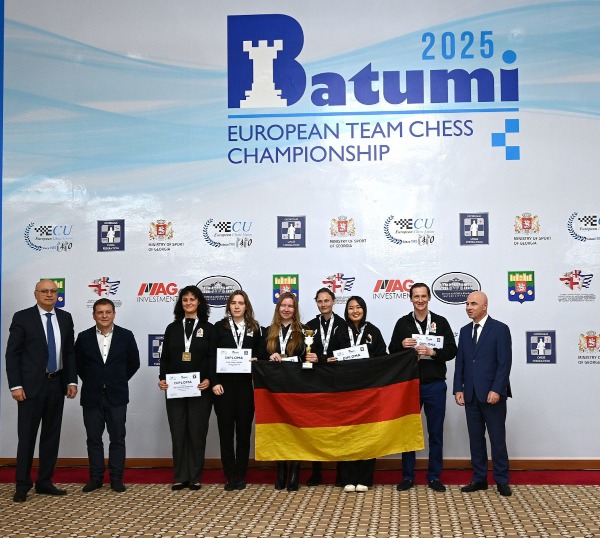
At the 2025 European Team Championship, his approach paid off: the German women’s team won gold — fifteen years after Efimenko himself celebrated Olympic gold as a player with Ukraine.
The circle has closed. Zahar Efimenko has proved that some games really can be won twice — once on the chessboard, and once in life.